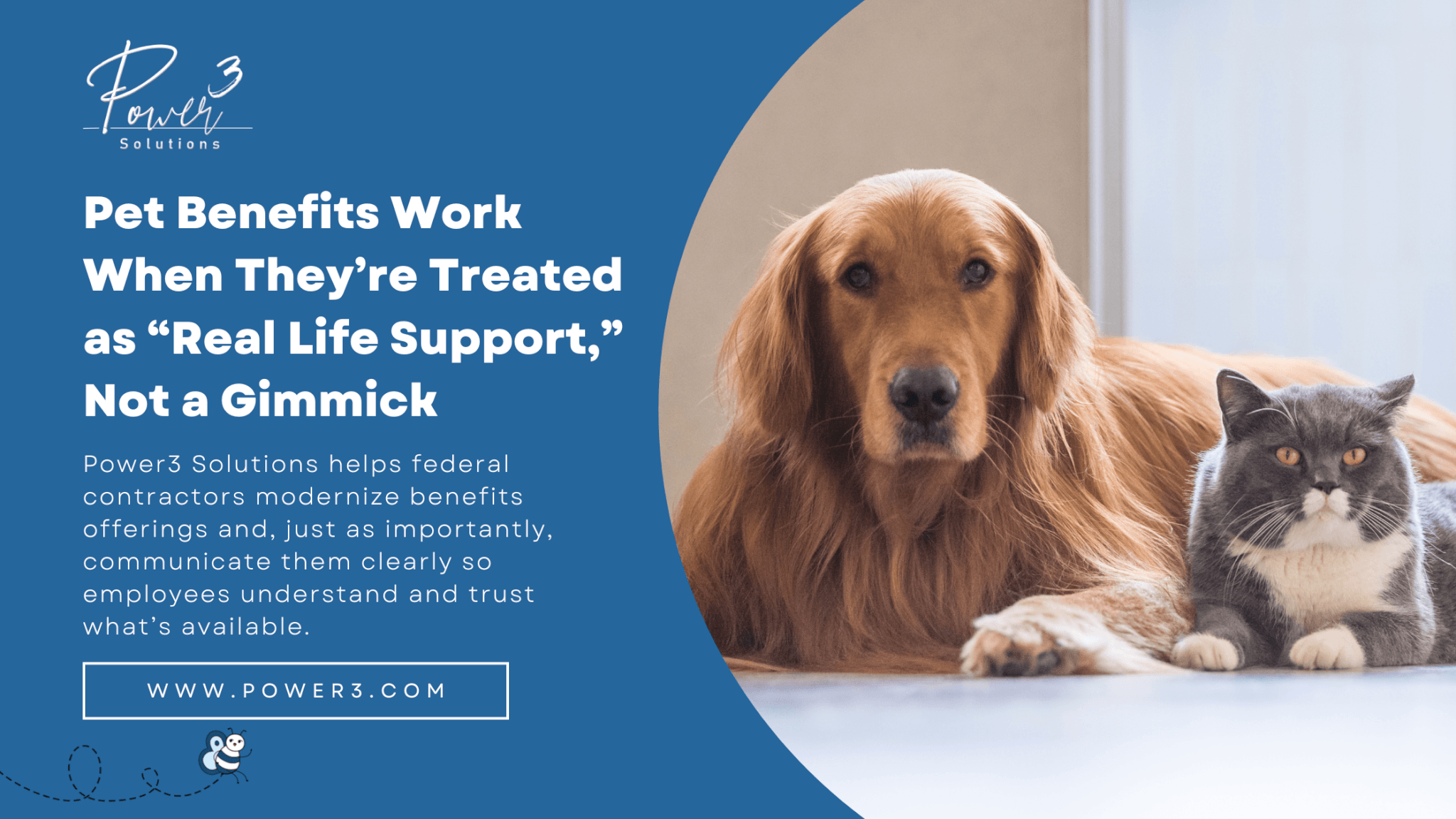
Pet Benefits Work When They’re Treated as “Real Life Support,” Not a Gimmick
This article is about how pet-related benefits—voluntary pet insurance, adoption reimbursements, virtual vet access, and thoughtful flexibility—can strengthen employee connection and reinforce values without becoming cheesy. For federal contractors, pet benefits can be surprisingly effective because they communicate humanity in a low-risk way. You’re not asking employees to disclose medical details or personal hardship. You’re acknowledging something many people openly care about: their pets are family, and pet-related costs and emergencies are part of life.
The point isn’t to replace core benefits. The point is to extend your total rewards story in a way that feels current and emotionally credible.
A Case Study: The Enrollment Email Everyone Actually Read
A contractor had a recurring open enrollment problem: lots of last-minute elections, confusion about choices, and a flood of “what does this mean” questions. HR did the usual things—FAQs, reminders, office hours—and still felt like employees weren’t engaging.
That year, the company added a voluntary pet insurance option and framed it under a “Quality-of-Life Benefits” section. HR expected mild interest. Instead, the pet benefit became the most discussed piece of the enrollment communications. Employees replied with stories about surprise vet bills, chronic conditions, and adoption experiences. What HR didn’t expect was the ripple effect: once employees paid attention to the pet section, they actually read the rest of the email. They clicked the benefits links. They asked better questions. The pet benefit didn’t just add a perk—it reopened trust in the benefits communication channel.
That matters because benefits don’t create value if employees don’t understand how to use them.
Why Pet Benefits Can Improve Culture Without Needing a Big Budget
Pet benefits tend to punch above their weight because they:
- signal empathy without being invasive
- create a shared “human moment” across diverse teams
- support recruitment messaging (“this company sees real life”)
- create positive conversation without forcing social participation
In high-skill environments, culture isn’t built by slogans. It’s built by repeated signals that feel authentic. A small benefit can be a big signal when it aligns with lived experience.
What “Pet Benefits” Can Mean—Beyond Insurance
Many employers hear “pet benefits” and think it’s either “bring your dog to work” or nothing. In reality, pet benefits can be structured, practical, and inclusive:
- Voluntary pet insurance (often employee-paid, payroll-deducted for ease)
- Adoption reimbursement (a modest stipend with simple documentation)
- Virtual vet access (quick consults reduce anxiety and unnecessary emergency visits)
- Pet bereavement flexibility guidance (not necessarily a formal policy, but a manager standard to handle the moment respectfully)
The key is not to oversell. You don’t want employees thinking the company is trying to distract them with cute perks instead of solving real issues. Frame pet benefits as one part of a broader “supporting life outside work” strategy.
How to Communicate Pet Benefits So Employees Trust Them
Pet benefits fail when they’re described vaguely or promoted like a gimmick. Employees want clarity:
- what is covered and what isn’t
- how payroll deduction works (if applicable)
- how to enroll and when
- where to go with questions
- one plain-language example of how the benefit can help (without promising outcomes)
A simple, credible line works better than hype:
“This is an optional benefit for employees who consider pets part of the family and want help managing unexpected veterinary costs.”
Also, make sure the benefit doesn’t become a culture divider. Not everyone has pets, and some employees have allergies or preferences that make pet-friendly workplaces uncomfortable. Keep the benefit optional and respectful. It’s support, not a personality test.
The Stat That Connects “Feeling Seen” to Staying
Gallup’s research found well-recognized employees are 45% less likely to have turned over after two years. Recognition isn’t only praise—it’s the experience of being understood and supported. Pet benefits can contribute to that when communicated sincerely and positioned appropriately.
The Quote That Keeps It Grounded
“Benefits are culture in measurable form.” What you choose to support says what you value.
Power3 Solutions
Power3 Solutions helps federal contractors modernize benefits offerings and, just as importantly, communicate them clearly so employees understand and trust what’s available. From voluntary benefits rollouts to employee-friendly FAQs and manager toolkits, we help turn “we offer it” into “employees actually use it.” Contact Business@power3.com and visit www.power3.com — Your People. Our Mission.